Plantation wood is quietly reshaping panel markets
With weak demand, conflicts and trade policies in focus, one factor continues to shape the industry: raw material.
If global wood panel demand continues to grow at the expected slow but steady pace, the industry has only two sources for additional raw material: increased harvesting from natural forests, or greater use of plantation forests.
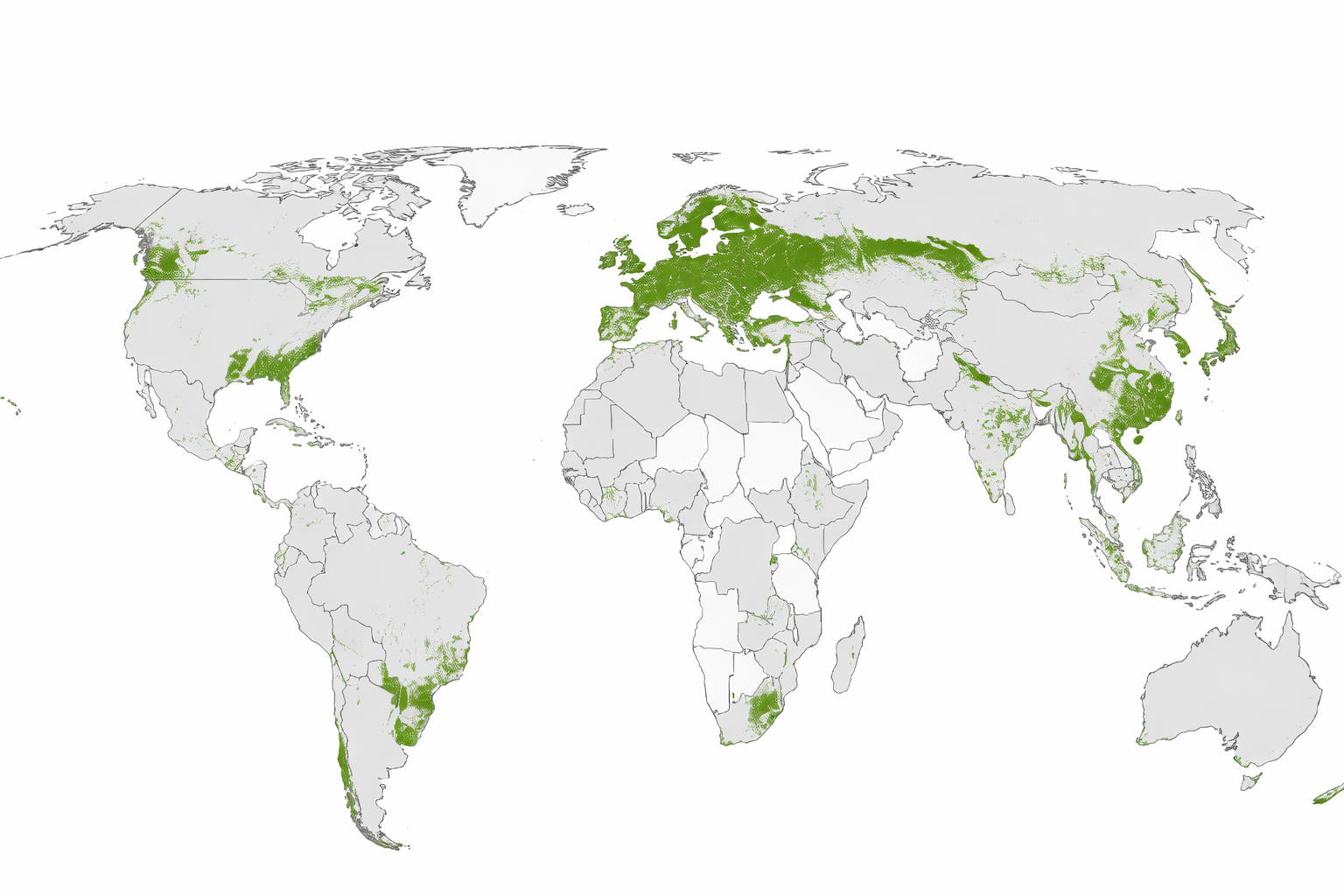
Natural forest harvesting is unlikely to expand significantly in many regions due to environmental policies and land-use restrictions. Plantation forests, on the other hand, have expanded steadily. According to FAO statistics, planted forests increased by about 75% between 1990 and 2020, growing from roughly 167 million hectares to around 290 million hectares worldwide. This suggests that a growing share of industrial wood supply will increasingly come from plantations.
Plantation forestry is largely based on fast-growing species such as eucalyptus, poplar, radiata pine and southern pine. These species are well suited for industrial processing and are gradually shaping panel markets. Poplar and eucalyptus are widely used in plywood production, while plantation pine provides fibre for structural products such as LVL, OSB and softwood plywood.
Plantation logs are typically smaller in diameter and more uniform than timber from natural forests. This favours manufacturing processes that can efficiently use smaller and more consistent raw material, as seen in the rise of OSB over the past decades.
For mills, understanding the fibre base remains a central part of competitiveness. Companies that align their raw material supply, production setup and product mix often find opportunities to improve efficiency and develop competitive panel products.
Another key competence for advanced panel producers is understanding their customers and how their panels are ultimately used. As plantation resources continue to expand in many regions, it will be interesting to observe how different players adapt their strategies and how this gradually influences wood panel markets.